
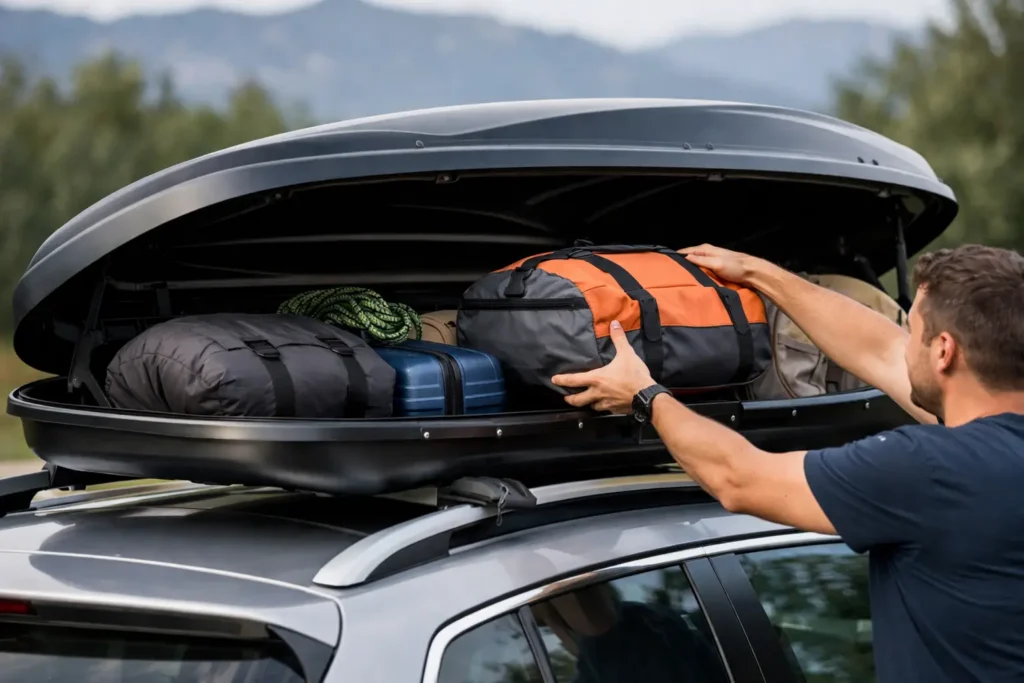
You only really notice how much luggage a family trip needs when the boot is full and there are still coats, bags and bits for the kids sitting on the drive. That is usually the point people start asking how to load roof box space properly, because extra storage is only useful if it is packed safely and sensibly.
A roof box can make a huge difference on holiday, especially if you are travelling with children, a pushchair, pet gear or camping kit. But loading it well is not just about squeezing in more. It affects how your car handles, how easy it is to find things on the journey and whether your belongings stay protected when you hit the motorway.
How to load roof box without causing problems
The biggest mistake people make is treating the roof box like a loft on top of the car. It is not there for everything heavy, awkward or last-minute. A roof box works best when it carries lighter, bulkier items that take up space in the car but do not put too much strain on the roof load limit.
That matters because every vehicle has a maximum permitted roof load, and that figure includes both the roof bars and the box itself. So if your bars and box already account for a fair chunk of the allowance, the remaining space for luggage may be less than you expect. This is one reason professional fitting and practical advice can save a lot of guesswork.
As a general rule, load the heaviest items in the car boot, as low down as possible, and keep the roof box for lighter cases, soft bags, bedding, coats and similar items. If you are carrying a few medium-weight pieces in the roof box, they should sit centrally and evenly rather than all pushed to one end.
Start with the weight, not the space
It is tempting to judge a roof box by how much room is left inside. In reality, weight comes first. A large box may have plenty of spare capacity, but that does not mean it should be packed to the brim with dense items.
Before loading anything, check three things: the maximum load rating of the roof box, the load rating of the roof bars and the roof load limit for your vehicle. The safe limit is always the lowest of those three figures. If you are hiring equipment and having it fitted for you, this is much easier because you can ask exactly what your setup can take.
Once you know the limit, pack with a bit of margin rather than aiming for the absolute maximum. Roads are not always smooth, weather changes quickly and a car loaded for a week away already behaves differently from normal. A little restraint makes for a calmer journey.
What should go in a roof box?
The best items for a roof box are bulky but relatively light. Think clothing bags, duvets, sleeping bags, towels, prams with removable lightweight parts, and soft holiday gear that would otherwise fill the boot.
It can also be useful for dirty or damp items on the way home, provided they are wrapped properly. That keeps the cabin and boot cleaner, especially after a camping break or a rainy weekend away.
What should stay out?
Very heavy items, fragile electronics and anything you might need in a hurry are usually better elsewhere. A roof box is not the ideal place for toolboxes, crates of drinks or anything that could shift with a lot of force. It is also worth keeping valuables out of sight inside the vehicle where possible, rather than leaving them in a box you will not want to open every time you stop.
Pack for balance, not just capacity
Good loading is about even distribution. If all the weight sits on one side or one end, the box can become harder to close properly and the car may feel less stable. You want the contents spread across the box with the denser items near the middle.
Soft bags work better than hard suitcases for this reason. They mould to the shape of the box and make it easier to fill gaps without creating pressure points. If you do use hard cases, place them carefully so they sit flat and do not push up against the lid.
Leave enough room for the lid to close without force. If you have to lean on it, rearrange the load. Forcing the box shut is a sign that the contents are sitting too high or unevenly, and that can affect both security and weather sealing.
Secure everything inside the box
Most decent roof boxes include internal securing straps, and they should be used every time. Even if the contents feel tightly packed, movement can still happen when you brake, change lanes or travel on uneven roads.
Fasten the straps over the main load so lighter items are held in place. If you have a mix of bags and loose items, place the loose pieces inside larger holdalls first. That keeps the load tidy and reduces shifting.
A well-packed roof box should not rattle, thump or feel unsettled once you are on the move. If you hear movement, stop when safe and check it. It is far easier to adjust things at the services than spend the rest of the journey wondering whether everything is still where it should be.
Think about what you need during the journey
One of the simplest packing tips is to avoid putting anything essential in the roof box unless you are happy stopping to access it. If your children will need snacks, spare clothes or travel entertainment, keep those in the car. The same goes for medication, passports and anything you may need quickly in poor weather.
A roof box is best treated as storage for items you will use at your destination rather than on the road. That small bit of planning makes service station stops much easier.
How to load roof box for a long motorway trip
Long-distance travel brings a few extra considerations. Wind resistance, side winds and sustained speed all make correct loading more important. A badly packed box may not come loose if it is fitted correctly, but it can still add unnecessary noise, drag and strain.
For motorway journeys, keep the load as compact and low as possible inside the box. Do not stack items higher than needed, and avoid leaving heavy objects loose near the front or rear. Check that the box is fully latched before setting off, then check it again after the first part of the journey.
It is also sensible to remember that your car will feel different. With passengers, luggage and a roof box fitted, braking distances can increase and cornering may feel less sharp. There is nothing dramatic about that, but it does call for smoother driving and a bit more space around you.
A few mistakes that are easy to avoid
Overpacking is the obvious one, but it is not the only issue. People also run into trouble by loading in a rush, ignoring the vehicle limit or packing all the awkward items on the roof simply to free up cabin space.
Another common mistake is putting wet or dirty gear in unprotected. Roof boxes are built for travel, but that does not mean every item inside should be left exposed. Use bags, liners or wraps where needed, especially for clothes and bedding.
Then there is simple convenience. If the first thing you need on arrival is buried at the bottom beneath everything else, unloading becomes more frustrating than it needs to be. Pack in reverse order where possible, with the least-needed items deepest inside.
When expert fitting makes life easier
For many drivers, the hardest part is not just how to load roof box space correctly but knowing the full setup is safe from the start. That includes compatible bars, correct fitting points and confidence that the box is mounted properly on the car.
That is where a professional fitting service earns its keep. It removes the uncertainty, especially if you are hiring a roof box for a one-off holiday rather than using one every month. South Staffordshire Roof Box Hire helps local motorists get set up with properly fitted equipment and straightforward advice, so you are not left second-guessing weights, positioning or whether you have tightened everything enough.
If you are travelling from Staffordshire, Wolverhampton or across the wider West Midlands, that peace of mind can be as valuable as the extra storage itself. Holidays are busy enough without wrestling with roof bars on the drive.
A roof box should make your trip easier, not add another thing to worry about. Pack the lighter bulky items up top, keep the weight balanced, secure everything properly and leave yourself a little margin rather than loading to the absolute limit. A calm, well-packed car is a much better way to start any journey.
