You usually realise you need roof bars at the worst moment – when the boot is already full, the children are asking where their bags are going, and your trip is only a day or two away. A good roof bar rental guide helps you sort that problem quickly, without turning a simple family break into a guessing game about fittings, compatibility or safety.
For most drivers, hiring makes far more sense than buying. Roof bars are essential if you want to carry a roof box, but they are not something many people use every week. Once the holiday is over, you are left with the cost of buying them, the job of storing them, and the worry of whether they were fitted properly in the first place. Renting is the straightforward option when you want the extra space without the long-term commitment.
Why use a roof bar rental guide at all?
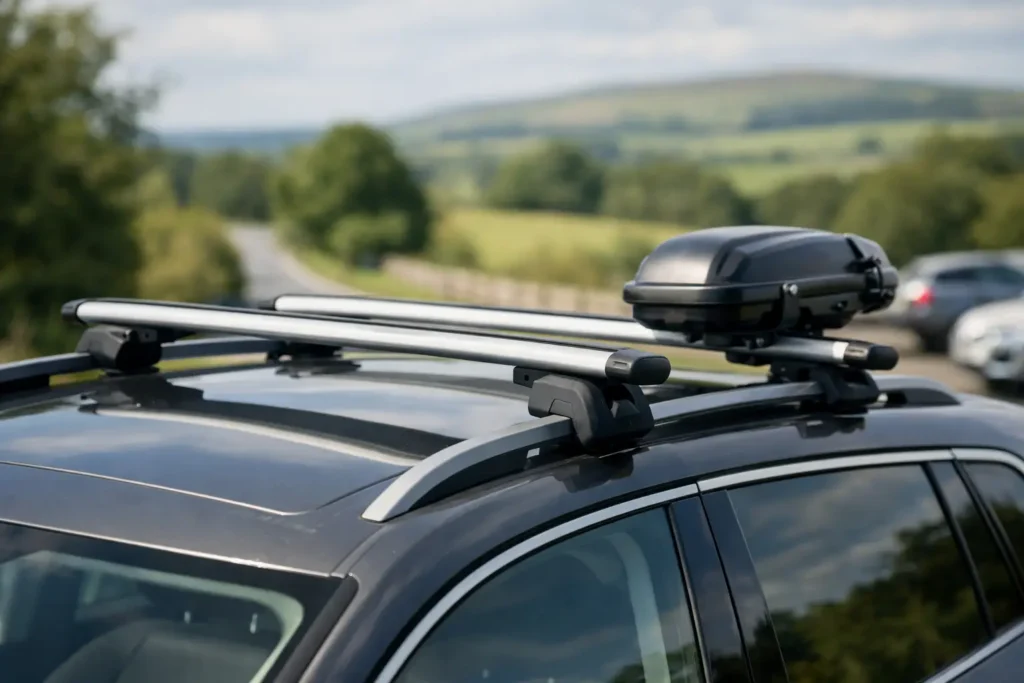
Roof bars are not one-size-fits-all. The right set depends on your exact vehicle make, model and year, and sometimes even the trim level or roof type matters. Some cars have raised rails, some have flush rails, and some need a specific fitting kit to attach bars securely.
That is where many people come unstuck. It looks simple online until you realise there are multiple bar lengths, different foot packs and several fitting kits that all sound similar. Order the wrong combination and you can waste time, money and a fair bit of patience. A proper roof bar rental guide should make the process clearer, not more complicated.
The key point is simple: matching roof bars to your car needs to be correct. Close enough is not good enough when the bars are carrying a loaded roof box at motorway speeds.
When hiring roof bars makes the most sense
If you only need extra carrying space for a holiday, camping trip, airport run or house move, hiring is often the sensible choice. Buying bars for a one-off journey rarely stacks up once you look at the full cost. Good quality branded bars are not cheap, and neither is the kit needed to fit them properly.
There is also the storage question. Roof bars are awkward to keep at home, especially if you do not have much garage or shed space. Many households already have enough bulky items to deal with. Hiring lets you use the equipment when you need it and hand it back when you do not.
It also suits people changing cars regularly. If you buy bars for one vehicle and then swap cars a year later, there is a fair chance they will no longer fit. With rental, that problem disappears.
A practical roof bar rental guide to choosing the right setup
Start with your car details. The registration is often the quickest way for a hire company to confirm what will fit, but it helps to know the make, model, year and whether the roof has rails. This matters because the fitting method changes from vehicle to vehicle.
Next, think about what the bars are actually for. If you are hiring them to carry a roof box, the bars need to be compatible with the box as well as with the car. Most customers are not looking for bars on their own. They need a complete setup that works together properly.
Weight matters too, though not in the way many people assume. It is not just about whether the bars can physically hold the load. Your vehicle has a roof load limit set by the manufacturer, and that total includes the bars, the box and whatever you pack inside it. A careful hire provider will help you stay within that limit.
Then there is journey type. A short run to Cornwall with a few duvets and travel bags is one thing. A longer drive into Europe with a fully loaded car is another. The right advice should reflect how you are travelling, not just what car you drive.
Professional fitting removes most of the stress
This is where hiring really earns its keep. For many motorists, the biggest worry is not whether they need roof bars, but whether they can fit them safely. The instructions can be fiddly, different systems tighten in different ways, and if something feels uncertain, it is hard to relax once you are on the road.
Professional fitting solves that. Instead of trying to work it out on your driveway with half an hour to spare, you turn up for a booked appointment and leave with everything fitted and checked. That saves time, but more importantly it gives peace of mind.
A proper fitting service should make sure the bars are matched to the vehicle, mounted correctly and ready for the equipment being carried. If you are also using a roof box, that should be secured and tested as part of the same process. For families heading off on holiday, that reassurance is often the difference between a stressful start and an easy one.
Cost, value and what you are really paying for
People sometimes compare rental with the cheapest bars they can find online and assume buying will be better value. On paper, maybe. In practice, it depends what you are comparing.
If you hire, you are not just paying for the bars. You are paying for the correct fitment, branded equipment, support, and the fact that you do not need to store or maintain anything afterwards. You also avoid spending money on the wrong parts and having to return them.
For occasional use, that is usually where the value is. A short-term rental can cost far less than buying a full setup outright, especially when you include a roof box. If the trip is only for a week or two, ownership often becomes the more expensive route.
Transparent pricing matters here as well. Clear costs, no hidden extras and no awkward surprises on collection day make the decision much easier. For most customers, convenience and certainty are worth a lot.
What to check before you book
First, make sure the hire company asks the right questions. If they are not interested in your vehicle details, roof type or what you plan to carry, that should ring alarm bells. A proper service will want to confirm compatibility before anything is booked.
Second, ask whether fitting is included. Many people assume it is, then find out they are expected to install the bars themselves. If you want the simplest and safest option, look for a service that handles fitting for you.
Third, check availability early if you are travelling during school holidays. Roof transport hire tends to be busiest when everyone is preparing for summer breaks, half-term trips and camping weekends. Leaving it too late can limit your options.
Finally, look at trust signals. Positive customer reviews, a clear booking process, and straightforward communication all matter. When somebody is fitting equipment to your car, you want to feel confident they know exactly what they are doing.
Common concerns drivers have
One of the most common questions is whether roof bars will damage the car. Correctly matched and properly fitted bars should not damage the vehicle. Problems are more likely when the wrong kit is used, the bars are overtightened, or somebody tries to adapt a setup that was never designed for that car.
Another concern is wind noise. Yes, roof bars can create some extra noise, and a roof box usually adds more. That is normal. For most people, it is a small trade-off for the extra carrying space, especially on a holiday journey where the alternative is packing the cabin floor to ceiling.
Fuel economy can also be affected. Adding bars and a box increases drag, so you may use a bit more fuel. Again, that is part of the trade-off. But if the choice is between one properly packed car and trying to cram everything inside, most families will take the convenience.
The easiest way to think about roof bar hire
If you need roof bars once or twice a year, hiring is usually the practical answer. You get the extra capacity when you need it, without paying full purchase costs or finding somewhere to keep everything afterwards. Better still, with professional fitting, you take away the uncertainty that puts many drivers off in the first place.
That is why a local, service-led approach works so well. South Staffordshire Roof Box Hire helps motorists across the West Midlands get properly fitted roof bars and roof boxes without the usual hassle, with clear pricing and booked appointments that keep things simple.
The best setup is not the most technical one or the most expensive one. It is the one that fits your car properly, carries what you need safely, and lets you set off feeling ready for the trip ahead.
