You only notice how small your car feels when the pushchair, travel cot, spare coats, snacks, and half the house are lined up on the drive. That is exactly where a good family travel roof storage guide helps. It is not about cramming more in for the sake of it. It is about making family journeys safer, calmer and a lot less stressful before you even turn the key.
For most families, roof storage solves a very specific problem. The boot fills up fast, rear seats disappear under bags, and suddenly the children have less room, the driver has poor visibility, and everyone starts a long journey already fed up. A roof box gives that space back. The trick is knowing when it is the right option, how to pack it properly, and whether it makes more sense to hire one rather than buy.
Why roof storage makes family travel easier
A family car can handle day-to-day life well enough, but holidays are different. You are packing for several people, different weather, maybe a buggy, maybe sports kit, maybe a dog as well. Even a decent-sized estate or SUV can start to feel tight once you add everything that does not fit neatly into one suitcase.
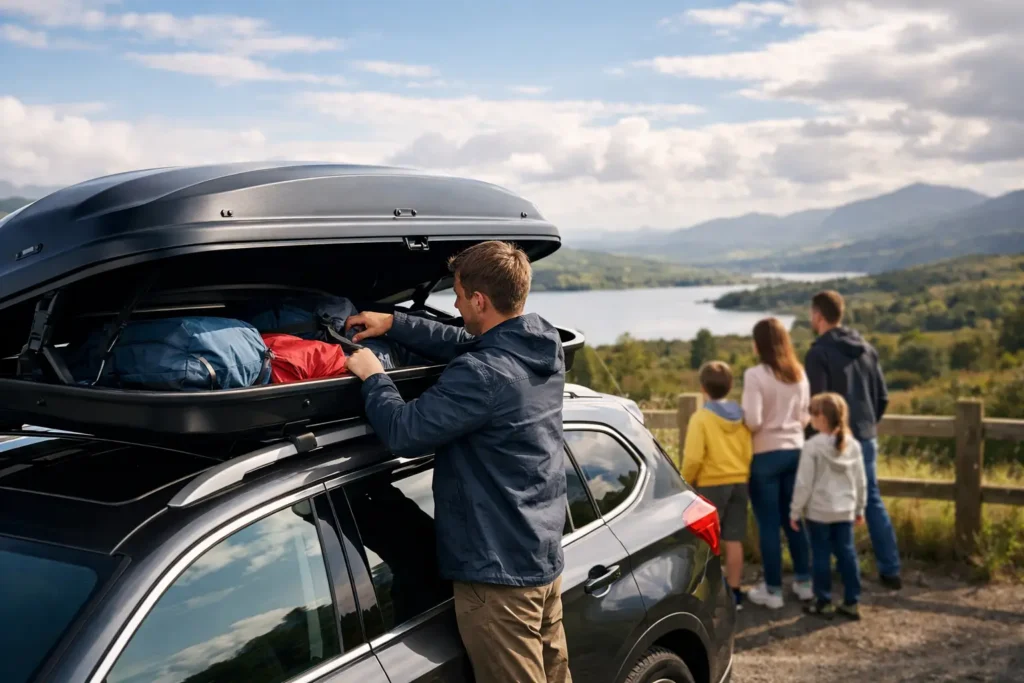
Roof storage works best when you use it to free up the cabin and boot, not overload the car with everything you can find. That usually means bulky but lighter items go on the roof, while heavier items stay lower down in the boot. Done properly, the result is a more comfortable car, better visibility, and less need to wedge bags around passengers’ feet.
There is also a practical point many people overlook. If everyone is squeezed in around loose luggage, the journey feels longer. Children get grumpier, quick stops become awkward, and unpacking at the other end turns into a scavenger hunt. A well-packed roof box makes the whole trip feel more organised.
Family travel roof storage guide – what should go in the roof box?
The simple answer is lighter, bulkier kit. Coats, bedding, soft bags, camping gear, travel cots, and lighter holiday essentials are ideal. These items take up lots of room but do not put unnecessary strain on the roof load.
What should stay in the car? Heavy suitcases, drinks, tools, and anything dense should generally remain in the boot, packed as low and as evenly as possible. That helps keep the car more stable on the road. It also matters for safety in sudden braking or poor weather.
There is a bit of common sense involved here. If you need an item during the journey, do not bury it in the roof box under three duvets and a week’s worth of beach gear. Keep snacks, medicines, travel documents, spare clothes and anything needed for children within easy reach inside the car.
Soft holdalls often work better than hard-shell suitcases in a roof box because they are easier to shape around the available space. That sounds minor until you are packing the car at six in the morning with tired children waiting by the front door.
Choosing the right type of roof storage
For most family holidays, a roof box is the easiest and most secure option. It keeps luggage protected from the weather, locks shut, and gives you a defined amount of extra space without the faff of strapping everything down individually.
Roof bags can be cheaper, but they are not always the best fit for regular family use. They can be more awkward to load, more exposed to weather and wear, and more variable depending on the vehicle. If you are setting off for a week away with children and want things simple, a solid roof box is usually the safer bet.
Size matters, but bigger is not always better. A larger box gives more flexibility, especially for families with bulky kit, yet the box still needs to suit the vehicle properly. You want enough capacity without ending up with something that feels oversized for the car. This is one reason professional advice and fitting can make a real difference.
Safety matters more than extra space
Roof storage should make the journey easier, not introduce new worries. That starts with using equipment that is suitable for your specific vehicle and fitted correctly. Not every car takes the same bars, and not every driver feels confident installing them. Fair enough. Many do not want to spend an evening on the drive second-guessing whether everything is secure.
A professionally fitted setup removes that uncertainty. It means the bars and box are matched to the vehicle, the fixings are checked properly, and you can set off knowing it has been installed by someone who does it regularly. For families, that reassurance is worth a lot.
Driving with roof storage also requires a few adjustments. Your car may feel different in crosswinds, fuel economy can drop, and height clearance suddenly becomes something you need to think about at car parks, ferry terminals and drive-throughs. None of this is difficult, but it does need attention.
It is also worth checking the vehicle handbook for roof load limits. The box itself, the bars and the contents all contribute to that total. More weight is not better. Smart packing is better.
Hiring versus buying – what actually makes sense?
This is where many families save themselves money and hassle. Buying a roof box and bars can make sense if you travel often enough to justify the upfront cost and have somewhere sensible to store them. But for a lot of households, roof storage is only needed a few times a year.
If that sounds familiar, hiring is usually the more practical option. You avoid the cost of buying branded equipment outright, you do not have a large roof box taking up space in the garage the other eleven months of the year, and you can get the right setup for your car without trying to piece it together yourself.
There is another benefit too. Hiring tends to suit one-off needs better. Maybe it is a summer holiday this year, a camping trip next month, or a Christmas visit to relatives with far too many presents in the boot. Temporary extra space is exactly that – temporary. Renting fits the real need.
For drivers across Staffordshire and the West Midlands, that convenience matters. A straightforward booking, proper fitting, and clear pricing usually beat spending hundreds on equipment you may barely use.
A practical family travel roof storage guide for packing day
Packing day goes more smoothly when you think in zones rather than bags. Put heavy items low in the boot first. Then use the roof box for the lighter, awkward items that would otherwise swallow cabin space. Leave a small accessible area in the car for the things you know you will need during the journey.
Try to load the roof box evenly from side to side. Do not put all the weight at one end. Secure the contents so they do not shift about, especially on longer motorway runs. If the box has straps inside, use them.
Before leaving, check that everything is locked, properly closed, and that you know your new vehicle height. It sounds obvious, but many drivers only remember the roof box when they approach a height barrier.
Give yourself a few extra minutes for the first journey too. With family travel, rushing causes more problems than it solves. A calm departure is part of the holiday.
When a fitted roof box service is the easiest option
For first-time users especially, the easiest route is often hiring a roof box with the bars and fitting included. It keeps the process simple. You do not need to guess compatibility, buy tools you may never use again, or worry whether you have tightened everything correctly.
That is why many families choose a local specialist rather than trying to sort it alone. A service like South Staffordshire Roof Box Hire gives people a practical option – branded equipment, full fitting, no need to store anything afterwards, and no big upfront purchase just to make one trip more comfortable. That suits family travel because it removes the awkward bits and lets you focus on the journey itself.
There is no one-size-fits-all answer. A couple heading off for a weekend away will pack differently from a family of five going camping in Cornwall. But the principle is the same. Roof storage works best when it creates space, improves comfort and is fitted with safety in mind.
If your next holiday already has enough moving parts, your luggage setup should not be one of them. Extra space is useful, but peace of mind on the road is even better.
